Twelve Months, Zero Regrets: Building a Shoe Wardrobe That Works Every Season
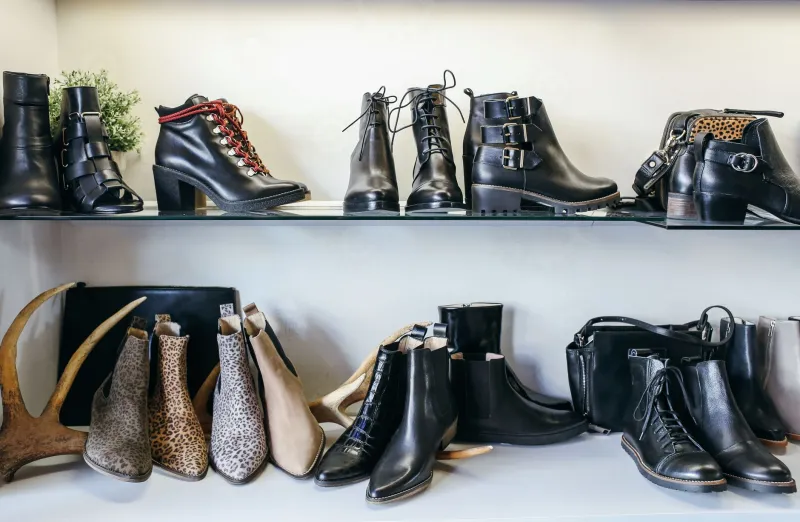
Let's be honest about something: most shoe collections aren't really collections at all. They're accumulations. A pair bought for a specific wedding. Some sneakers that felt like a good idea at the time. A few workhorses doing the heavy lifting while everything else gathers dust.
Building a shoe wardrobe that's genuinely intentional—one that moves with you through changing seasons, shifting dress codes, and the full range of your actual life—takes a different kind of thinking. Not more shoes, necessarily. Smarter ones.
Why Seasons Matter More Than You Think
Climate has a direct relationship with footwear, and it goes beyond the obvious (boots in winter, sandals in summer). Temperature and humidity affect how leather breathes, how synthetic materials hold up, and how your feet themselves behave. Feet tend to swell slightly more in heat, which means a shoe that fits perfectly in January might feel tight by July. Wet weather demands different sole materials and construction. Dry, cold air can crack leather that isn't properly conditioned.
Beyond the physical, there's a psychological dimension that doesn't get talked about enough. Wearing the right shoe for the moment—one that suits the weather, the occasion, and your outfit—creates a quiet sense of readiness. It's the difference between feeling put-together and feeling like you're making do. And that difference shows up in how you carry yourself.
The Four-Season Framework
Think of your shoe wardrobe in four distinct chapters, each with its own demands.
Spring (March–May) is arguably the trickiest season. Weather in most of the US is genuinely unpredictable—warm one day, cold and rainy the next. Your spring rotation needs flexibility above everything else. A clean white sneaker pulls weight here. So does a loafer in a lighter leather or suede. Ankle boots with a slightly lower heel bridge the gap between the tail end of winter and the warmer days ahead. Avoid investing heavily in open-toe styles until temperatures are consistently above 60°F—nothing undermines a look like cold, unhappy feet.
Summer (June–August) is when your wardrobe can afford to open up. Sandals, mules, espadrilles, and lighter sneakers all earn their place. But summer also means more walking, more outdoor events, and more situations where your shoes will be tested by heat, humidity, and long hours. This is the season to pay close attention to footbed support—sandals especially can look effortless while doing nothing for your arches. Seek out styles with contoured footbeds and adjustable straps, which accommodate the natural swelling that comes with warmer temperatures.
Fall (September–November) is when many style-conscious people feel most in their element. Cooler temperatures mean richer textures, deeper colors, and the return of boots in every form. A well-chosen ankle boot is one of the most versatile investments you can make for this season—it works with dresses, trousers, denim, and everything in between. Fall also signals the return of more formal occasions: galas, work events, holiday parties starting in November. Having a polished heel or a sleek loafer ready before you need it saves the last-minute scramble.
Winter (December–February) demands practicality without abandoning style. Waterproof construction, rubber or lug soles, and insulated options earn their closet space here. But winter also includes some of the year's most dressed-up occasions. A versatile heel in a neutral or metallic tone can carry you from holiday dinners to New Year's events without missing a beat. The key is not letting winter become an excuse to wear only utilitarian footwear—your feet still deserve to look great.
Navigating the Transitions
The weeks between seasons are where most wardrobes fall apart. That awkward stretch in late September when it's 70°F during the day and 50°F at night. The early March thaw that turns back into a cold snap. These transitional windows reward having a few specific styles on hand.
A block-heel mule in a darker leather is a fall-transition hero—open enough to feel current but substantial enough for cooler air. A leather sneaker in a neutral tone bridges late summer and early fall without committing too hard in either direction. For the spring transition, a pointed-toe flat in a light suede or fabric works when sandals are still a few weeks away.
The Occasion Layer
Beyond climate, your shoe rotation needs to account for the actual shape of your life. A corporate professional in a formal office environment needs different footwear architecture than someone in a creative field with a casual dress code. Neither is wrong—but both need a strategy.
A useful exercise: map out a typical month in your life and note how many distinct "scenes" you move through. Morning commute, office environment, lunch meetings, after-work social, weekend errands, formal dinners—each scene has its own footwear expectation. Once you can see your life laid out that way, the gaps in your rotation become obvious.
Travel adds another layer. If you travel frequently for work or leisure, your shoes need to earn double duty. A sleek ankle boot that works in a business meeting and at a dinner reservation is worth three times what a single-purpose shoe costs you in luggage space and mental energy.
The Closet Audit Test
Here's a simple framework for evaluating whether a shoe deserves its space in your rotation: Can it serve you in at least two distinct seasons? Does it work for both professional and social occasions, or does it excel in one specific context that you actually encounter regularly? Has it been worn in the last six months?
If a shoe fails all three questions, it's occupying space that a better choice could fill. If it passes at least two, it's earning its keep.
The Confidence Connection
There's a reason getting dressed in the morning feels easier on some days than others, and often it starts at your feet. When your shoes are right—right for the weather, right for what's ahead, right for how you want to show up—the rest of your outfit follows. It's not superstition. It's the simple logic of feeling prepared.
Building a thoughtful, seasonal shoe wardrobe isn't about having more. It's about having exactly what you need, exactly when you need it. And that kind of readiness? It shows.