The Person Who Knows Your Shoes Better Than Anyone Isn't Your Stylist
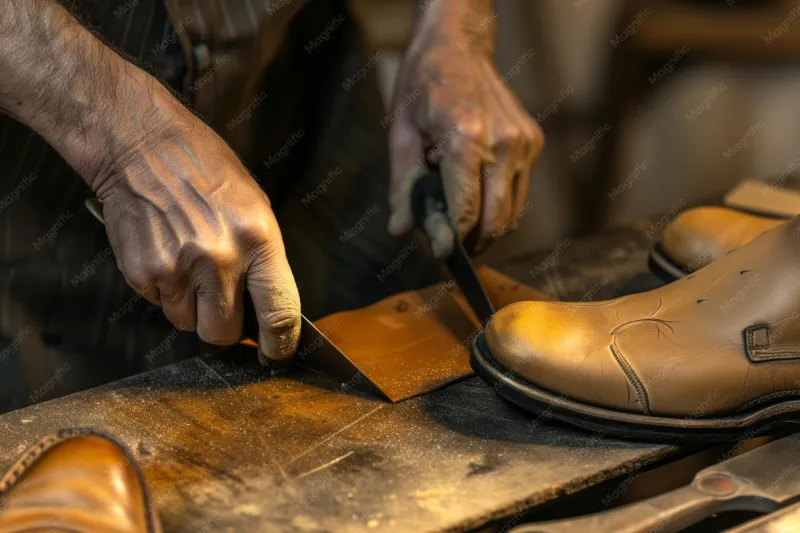
Photo: cobbler craftsman repairing luxury leather shoes in small workshop close up hands, via img.freepik.com
There's a small shop in the West Village in Manhattan — the kind with a hand-painted sign and a bell above the door — where a cobbler named Sal has been working for over thirty years. He doesn't have a website. He doesn't post on Instagram. He has a six-week wait.
His regulars don't talk about him openly, the way you might talk about a great restaurant. They treat the information like a secret. Because finding a cobbler you trust — one who actually understands leather, construction, and the particular way your foot meets a sole — is a little like finding a great therapist. You don't give that away lightly.
But here's the thing about Sal, and about every skilled shoe repair professional working quietly in neighborhoods across the country: they know things about your style that no stylist, no personal shopper, and no algorithm ever could. Because they've seen your shoes from the inside out, worn and weathered and real.
What a Cobbler Actually Sees
When you hand a pair of shoes to a skilled cobbler, you're handing them a biography.
The wear pattern on a sole reveals how you walk — whether you pronate inward, roll outward, or carry your weight on your heels. The condition of the upper tells them how often you wear the pair and how well you've stored it. The state of the insole tells them whether you've been on your feet all day or gliding through air-conditioned offices. And the fact that you've brought it in at all tells them something perhaps most important of all: you care about this shoe. It matters to you.
Over time, that accumulated information becomes surprisingly intimate. A cobbler who's resoled your go-to work pump three times knows that you wear it relentlessly. The one who's replaced the heel tip on your favorite boots every winter knows you walk fast and you walk everywhere. They know which pairs you save for special occasions and which ones you run into the ground because you love them too much to stop wearing them.
None of that data lives in a style file or a lookbook. It lives in the hands of someone who's been quietly paying attention.
The Consultation You Didn't Know You Were Having
Some of the best shoe advice in America happens over a repair counter, not in a boutique.
A good cobbler will tell you, without being asked, when a shoe is worth saving and when it isn't. They'll point out that the leather on a particular pair is exceptional — worth every penny of a resoling — while gently suggesting that another pair, despite its good looks, was built to be disposable. They'll notice when you've been wearing the wrong size and mention it, because they've seen what that does to a sole over time.
They'll also tell you things a stylist might not. A stylist has an aesthetic agenda — they're working toward a look, a vision, a transformation. A cobbler's agenda is pure: make the shoe last, make it fit, make it function. That objectivity is genuinely valuable, especially when you're trying to decide whether to invest in a repair or move on.
Many longtime cobbler customers describe the relationship in terms that sound almost like mentorship. You start to understand leather quality differently when someone who works with it every day explains why a particular pair is worth three resoles. You start to see construction details you'd never noticed before. You become, slowly, a more educated shoe person — and that education pays dividends every time you shop.
The Fast Fashion Problem, Seen from the Repair Bench
Ask any cobbler working in the US today about the shift they've witnessed over the past two decades and you'll hear a consistent story. More shoes come through the door that simply can't be repaired — not because of damage, but because of how they were made. Glued construction instead of welted. Synthetic soles that can't be replaced. Uppers that aren't worth the cost of the labor to save them.
It's a quiet indictment of disposable fashion, delivered from the most credible possible source: the person whose entire livelihood depends on shoes being worth fixing.
The cobblers who are thriving are the ones whose customers have made a different choice. People who invest in Goodyear-welted construction, full-grain leather, and quality craftsmanship. People who understand that a shoe built to be repaired is a shoe built to last — and that a shoe built to last is, in the long run, the only shoe worth owning.
At Salon 3 Soles, this philosophy sits at the heart of everything we do. The shoes worth falling in love with are the shoes worth taking care of. And taking care of them means building a relationship with someone who knows how.
How to Find Your Cobbler
If you don't already have a cobbler you trust, finding one is worth the effort. Here's where to start:
Ask at independent shoe boutiques. The staff at quality footwear retailers almost always have a referral. They've seen what good repair work looks like, and they know who does it.
Look for longevity. A cobbler who's been in the same location for ten or more years is a cobbler with a loyal clientele. That loyalty means something.
Start with a small job. Bring in a pair for a heel tip replacement or a polish. See how they handle it, how they communicate, whether they treat the shoe with the same care you do.
Trust your instincts. The right cobbler will ask questions. They'll want to understand the shoe before they touch it. That curiosity is a very good sign.
A Relationship Worth Nurturing
There's something quietly countercultural about the cobbler-customer relationship in 2025. In an era defined by convenience, speed, and the easy disposal of things that no longer spark joy, choosing to repair — to invest in the continuation of something you already love — is a genuine act of intention.
Your cobbler is a guardian of that intention. They remember the shoes you brought in with a broken heart, and the ones you dropped off practically skipping. They've seen your style evolve, your taste refine, your commitment to quality deepen.
That's not just a service relationship. That's a partnership. And it might be the most stylish thing about you.