Closet Confessions: What Luxury Shoe Collectors Are Finally Admitting About the Money They Spend
There's a particular kind of mental math that serious shoe collectors know well. It's the kind you do at the register — or more often, at checkout on a brand's website at midnight — where you divide the price by the number of times you'll wear them, remind yourself that this pair is an investment, and click confirm before your better judgment has a chance to weigh in.
For a long time, that math stayed private. Luxury footwear spending was the kind of thing you hid in plain sight: bags tucked into the back of the closet, tags snipped before a partner could see, credit card statements glossed over during monthly budget check-ins. But something has started to shift. Across social media, in collector communities, and in conversations happening right here with clients who come through our doors, people are getting genuinely honest about what they've spent on shoes — and what that spending actually means.
So let's have the real conversation.
The Numbers Nobody Was Saying Out Loud
When you ask collectors what they've spent on footwear over a lifetime, the answers range from eye-opening to staggering. Some are in the five-figure range — a number that sounds large until you consider it might represent fifteen years of intentional purchasing. Others have crossed six figures, particularly those who've built collections anchored by rare or archival pieces. A small but vocal group will quietly admit to seven figures, typically in the context of investment-grade acquisitions: limited Hermès mules, vintage Manolo Blahniks, early Christian Louboutin runway styles that have since tripled in resale value.
What's interesting isn't the number itself. It's the story collectors attach to it.
For some, the spending reflects a carefully constructed vision — a wardrobe built with patience, intentionality, and a genuine understanding of what each pair contributes to their style and life. For others, the collection is a more complicated artifact: a record of stress purchases, retail therapy sessions, and moments where a new pair felt like the fastest available solution to a problem that had nothing to do with shoes.
Both things can be true. Often, they are — in the same closet, on the same shelf.
Curation vs. Compulsion: Knowing the Difference
The distinction between intentional collecting and compulsive buying isn't always obvious from the outside, and it's not always obvious from the inside, either. But collectors who've done the work of examining their habits tend to describe a few clear markers.
Intentional curation looks like this: You know why you bought something. You can articulate how it fits into your existing wardrobe, what gap it fills, what it replaces. You feel satisfied after the purchase — not just in the moment, but a week later, a month later. The shoes get worn. They get cared for. They hold their place in your rotation because they've genuinely earned it.
Compulsive purchasing tends to feel different: The urgency is the point. There's a spike of excitement at the moment of purchase that fades faster than expected. The shoes arrive, they're beautiful, and then — somehow — they migrate to the back of the closet before they've been worn more than once. The next purchase comes before you've fully processed the last one. And if someone asks you how many pairs you own, you genuinely don't know.
Neither pattern makes you a bad person. But only one of them is building something.
The Psychology Behind the Purchase
Luxury footwear occupies a unique psychological space. Shoes are personal in a way that, say, furniture or art isn't. They're on your body. They carry you through your actual life. And they're visible — to colleagues, to strangers, to yourself every time you glance down.
For many collectors, shoes are a language. A way of signaling identity, communicating taste, claiming space in rooms where they might otherwise feel unseen. That's not frivolous. That's deeply human. The desire to be seen — to walk into a room and have your presence register — is legitimate, and the right pair of shoes genuinely can do that.
The complication arises when the language becomes noise. When the collection grows so large that no individual pair carries meaning anymore. When the purchasing is doing emotional work — managing anxiety, processing disappointment, chasing a feeling of control — that it was never designed to do.
Several collectors describe a turning point that sounds remarkably similar: standing in front of a closet full of extraordinary shoes and feeling nothing. Not pleasure, not pride, just a kind of flatness. That moment, more than any bank statement, tends to be the one that prompts real reflection.
A Framework for Getting Honest With Yourself
You don't need a therapist to start examining your shoe spending — though there's no shame in that conversation, either. What you do need is a willingness to sit with a few uncomfortable questions.
The 90-Day Rule: If you haven't worn a pair within the last 90 days and can't articulate a specific upcoming occasion when you will, it's worth asking what that pair is actually doing in your collection. Is it serving you, or is it just taking up space?
The Purchase Motivation Check: Before your next acquisition, pause long enough to ask what's driving it. Are you buying because this pair genuinely completes something in your wardrobe? Or are you buying because you had a rough week, you deserve something, and this was the most beautiful thing available at the moment you needed a lift? Both answers are honest. Only one leads to a collection you'll love in five years.
The Values Alignment Question: Does your collection reflect what you actually value — quality, artistry, heritage, sustainability, versatility — or does it reflect something else? Anxiety about status. The need to keep up with a peer group. A habit of rewarding yourself that started as a treat and became a default?
The Cost-Per-Wear Reality Check: This is the math collectors are most willing to do and least willing to follow through on. A $900 pair of heels worn 200 times costs you $4.50 a wear. A $400 pair worn twice costs you $200 a wear. Luxury is often the better financial decision — but only if you're actually wearing what you buy.
What a Thoughtful Collection Actually Looks Like
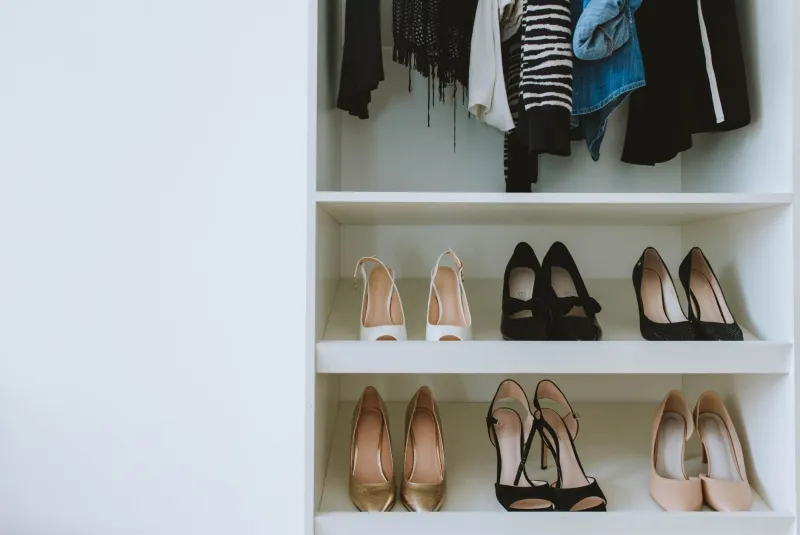
At Salon 3 Soles, we see collections of every size and every price point. And the ones that feel genuinely satisfying to their owners share a few common qualities: they're edited, they're intentional, and every pair in them has a story that goes beyond the purchase.
The collectors who seem most at peace with their spending aren't necessarily the ones who've spent the least. They're the ones who can walk you through their closet and tell you exactly why each pair is there. They've made peace with the shoes they've retired. They're not chasing the next thing because the current thing is already enough.
That's the goal worth building toward — not a smaller collection, not a cheaper one, but an honest one. One where every pair reflects a choice you actually made, not a moment you were trying to escape.
Your shoes carry you through your life. It's worth making sure they're going somewhere you actually want to go.