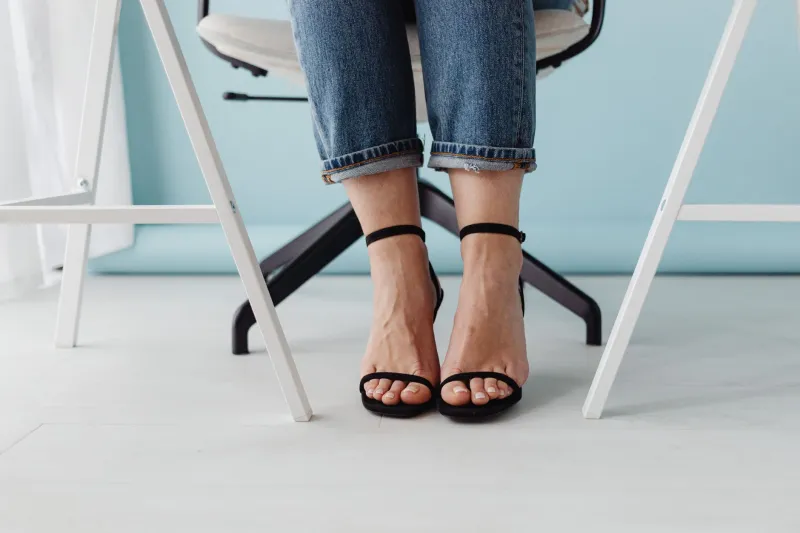
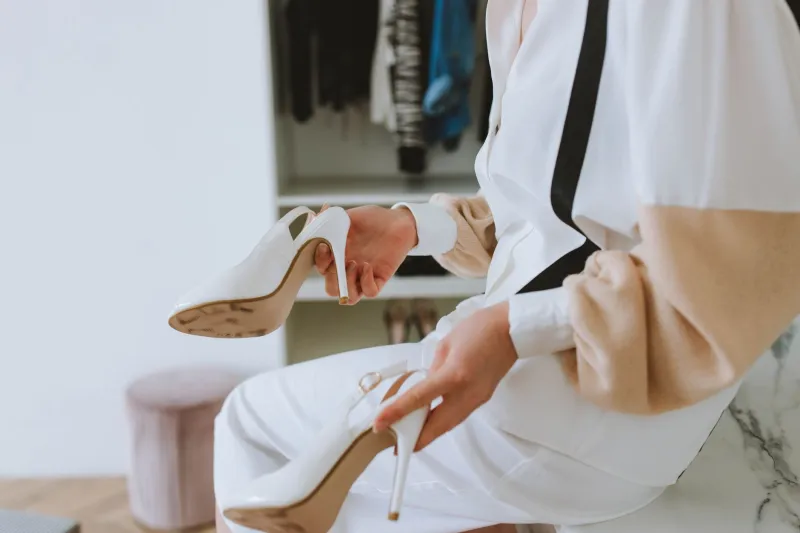
Money, Love, and Heels: How to Have the Luxury Shoe Talk Without Losing Your Mind (or Your Partner)

Let's be real for a second. You've been eyeing that pair for weeks. Maybe months. You've done the research, checked the craftsmanship, justified it six different ways in your head — and you're ready. The only thing standing between you and those shoes is a conversation you'd honestly rather skip.
Sound familiar?
Whether you share finances, share a home, or simply share your life with someone who notices when a new box appears by the front door, navigating the "luxury shoe talk" is something a lot of us quietly wrestle with. And it's worth doing right — not because you need permission (you don't), but because how you talk about money and personal investment says a lot about how a relationship actually functions.
At Salon 3 Soles, we believe that great footwear is part of a fuller, more intentional life. So let's talk about how to bring your partner into that vision without it turning into a whole thing.
Start With the "Why" Before the "How Much"
Here's where most of these conversations go sideways: one person leads with the price tag, and the other person immediately reacts to the number without any context. That's a losing setup for everyone.
Before you even mention a dollar amount, get clear on your own reasoning. Ask yourself what this purchase actually represents. Is it a reward for hitting a professional milestone? A commitment to buying fewer, better things? A piece of your identity that makes you feel grounded and confident when you walk into a room?
When you can articulate the why clearly — not defensively, just honestly — the conversation shifts from "I want to spend money" to "here's what this means to me." That's a much easier place for a partner to meet you.
Try something like: "I've been thinking about building a wardrobe that actually lasts, and investing in one really well-made pair of shoes is part of that. Can I tell you what I've been looking at?"
It's low-pressure, it's transparent, and it opens a door rather than closing one.
The Long-Game Argument (and Why It Actually Works)
One of the most effective ways to reframe luxury footwear in a shared financial context is to talk about cost-per-wear — a concept that sounds a little nerdy but lands surprisingly well.
A $400 pair of well-constructed leather pumps or loafers, properly cared for and resoled when needed, can realistically stay in rotation for seven to ten years. That breaks down to pennies per wear. Meanwhile, four rounds of $80 fast-fashion shoes that fall apart in a season? That's $320 gone with nothing to show for it — and no style story worth telling.
This isn't just a rationalization trick. It's genuinely how quality footwear works. The materials hold up. The structure supports your foot over time. And frankly, a shoe that fits well and looks beautiful tends to get worn — a lot.
If your partner responds well to data (and many do), this framing can be genuinely persuasive without feeling manipulative. You're not spinning anything — you're just presenting the full picture.
Make Room for Their Perspective, Too
Here's something that gets overlooked: if you want your partner to respect your relationship with personal style, it helps to be curious about theirs — even if their version of "investment spending" looks completely different from yours.
Maybe they prioritize tech, or experiences, or a really good road bike. When both people in a relationship feel like their values around spending are heard and respected, the whole dynamic around money gets easier. You stop feeling like you have to sneak things in, and they stop feeling blindsided.
This is also a good moment to revisit how you're structuring your finances together. A lot of couples find that maintaining some individual discretionary spending — a monthly amount each person can use however they want, no questions asked — takes the heat off entirely. You get your shoes. They get their thing. Nobody's keeping score.
Reframe "Indulgence" as Investment in Yourself
There's a cultural script that still, frustratingly, frames women's spending on clothing and beauty as frivolous while treating other purchases as serious or strategic. That script is worth pushing back on — gently but firmly.
Luxury footwear, when chosen thoughtfully, is part of how many people manage their confidence, their professional presence, and honestly, their physical wellbeing. A shoe with proper arch support and quality construction isn't just prettier than its cheaper counterpart — it's better for your body. Combine that with a regular pedicure that keeps your feet healthy and your skin maintained, and you've got a genuine self-care practice that pays dividends in how you feel every single day.
That's not vanity. That's maintenance. And most partners, when they understand it that way, get it.
Practical Moves That Keep the Peace (and the Shoes)
If you want to make this easier in the long run, a few practical habits help:
Set a personal style budget and stick to it. When your partner knows there's a defined amount set aside for this — and that you're working within it — there's less anxiety around individual purchases.
Talk about it before you buy, not after. Bringing your partner in early, even just saying "I'm thinking about this, what do you think?" builds trust and avoids the dreaded "how long has that been in the closet?" conversation.
Let them see what you love about it. Enthusiasm is contagious. If you're genuinely excited about a pair — the way the leather feels, the way the heel is balanced, the fact that it goes with everything you own — share that. You might be surprised how much interest a little passion generates.
Don't apologize for having taste. There's a difference between being considerate of shared finances and shrinking yourself to avoid conflict. You're allowed to love beautiful things. A good partner will want you to.
The Bigger Conversation Underneath
At the end of the day, talking about luxury shoes with your partner is really a conversation about values — about what you prioritize, how you define wellbeing, and how much space each of you gets to be fully yourselves within a shared life.
The couples who navigate this well aren't necessarily the ones who agree on everything. They're the ones who've learned to stay curious about each other, to talk about money without it becoming a power struggle, and to genuinely celebrate the things that make each other feel alive.
Your shoes are part of that story. Own it — literally and figuratively.